

Advantages of Mechanical Splices for Reinforcement Bars as an Alternative to Lap Splice Connections
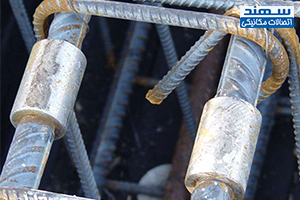
There are several methods for connecting rebars together. In the mechanical splice method, two rebars are connected end-to-end, allowing them to perform similarly to a continuous single reinforcement bar. This provides many advantages for both the structure and the contractor.
Using mechanical splices for reinforcement not only increases the strength of the structure but also reduces the overall construction cost, making it a suitable alternative to lap splice connections. Today, most developed and advanced countries no longer use lap splice connections, and in some regions, their use is prohibited. The best replacement for lap splice connections is the mechanical connection of rebars using couplers. In the following, the advantages of mechanical splices for reinforcement as an alternative to lap splice connections are presented.
10 Most Important Advantages of Mechanical Splices for Reinforcement Bars
In lap splice connections, the factor that creates connection stability is the presence of concrete, and if the concrete is damaged, the lap splice connection will fail. However, in mechanical splices, the stability of the connection does not depend on concrete. This feature provides greater structural stability when concrete is damaged during natural disasters.
1- Reduction in structural weight due to the negligible weight of the mechanical splice compared to the lap splice connection (6 to 100).
2- Shorter connection length compared to lap splice connections (4 to 100).
3- Possibility of optimized structural design due to reduced structural weight and consequently reduced concrete cross-sectional dimensions.
4- Organized arrangement of rebars, resulting in sufficient space for proper concrete placement.
5- Creation of an integrated reinforcement connection, allowing rebars to act as a continuous element at the connection point when subjected to earthquake-induced forces.
6- Alignment of rebars along the same axis, resulting in direct force transfer.
7- Reduction of the steel-to-concrete ratio in concrete sections.
8- Saving in raw material consumption (reinforcement steel) due to reduced waste.
9- Ability to be used without limitations at any position within a concrete structure.
10- In addition to the above advantages, the use of mechanical splices is also economically justified when considering the factors mentioned below.
Other Advantages of Mechanical Splices for Reinforcement Bars
1- Lap splice connections have numerous problems and disadvantages. In addition, the use of lap splices has certain limitations in some cases and locations (Clause 20-5-1-2-6 of the Iranian Concrete Code). These limitations include:
a- Beam and column connections
b- A length equal to twice the section height from the face of the support
c- Locations where the formation of plastic hinges is possible
Unlike lap splice connections, mechanical splices can be used at any position and location. Therefore, by using mechanical splices as a replacement for lap splices, reinforcement can be utilized without waste. Typically, approximately 15% of purchased reinforcement in each project becomes waste.
2- Due to the coefficients applied in Chapter 9 of the regulations, the lap splice length increases, and as a result, the weight of the lap splice connection also increases. For example, for a 32 mm rebar, considering the relevant coefficients, the weight of the lap splice is approximately 13 kg.
3- Due to the lightweight nature of mechanical splices (the ratio of the weight of a mechanical splice or coupler replacing a lap splice to the lap splice weight is 6 to 100), the structural weight is significantly reduced. This enables optimized section design and results in cost reduction (13 kg lap splice weight compared to 600 g mechanical splice weight for a 32 mm rebar).
4- According to Clause 20-5-2-2 of the Iranian Concrete Code, the reinforcement-to-concrete ratio must not exceed 6%. This limitation must also be observed at splice locations. Therefore, larger structural sections may be required to meet this requirement, resulting in increased costs.
5- According to Clause 20-5-2-2-3 of the Code, at lap splice locations, the splice length must be considered as 1.3 times the required tensile splice length, which increases raw material consumption and costs.
6- According to Clause 20-5-2-3-4 of the Code, the number of stirrups required at lap splice locations approximately doubles, leading to increased reinforcement consumption and higher costs. However, by using mechanical splices as a replacement for lap splices, which have a much shorter length, there is no need for additional stirrups. This is because the length of the mechanical splice is less than the spacing between two consecutive stirrups, resulting in reinforcement savings. (The ratio of mechanical splice length to lap splice length is 4 to 100; for example, a mechanical splice for a 32 mm diameter rebar has a length of approximately 7.5 cm.)
7- In lap splice connections, aligning the axes of rebars requires bending and creating an S-shaped configuration, which increases costs. However, in mechanical splices, the two rebars are aligned directly along the same axis.
The points mentioned in this article are among the most important advantages of mechanical splices, which are used as an alternative to lap splice connections. Mechanical splices have additional advantages as well, but we will limit this article to the mentioned points.
Sahand Mechanical Splices recommends using the coupling method instead of lap splice connections so that respected clients can benefit from the advantages of mechanical splices to the fullest extent.
You can also contact +98 21 44024118 to receive free consultation and obtain further information, and consult with the specialists of Sahand Mechanical Splices regarding your projects.