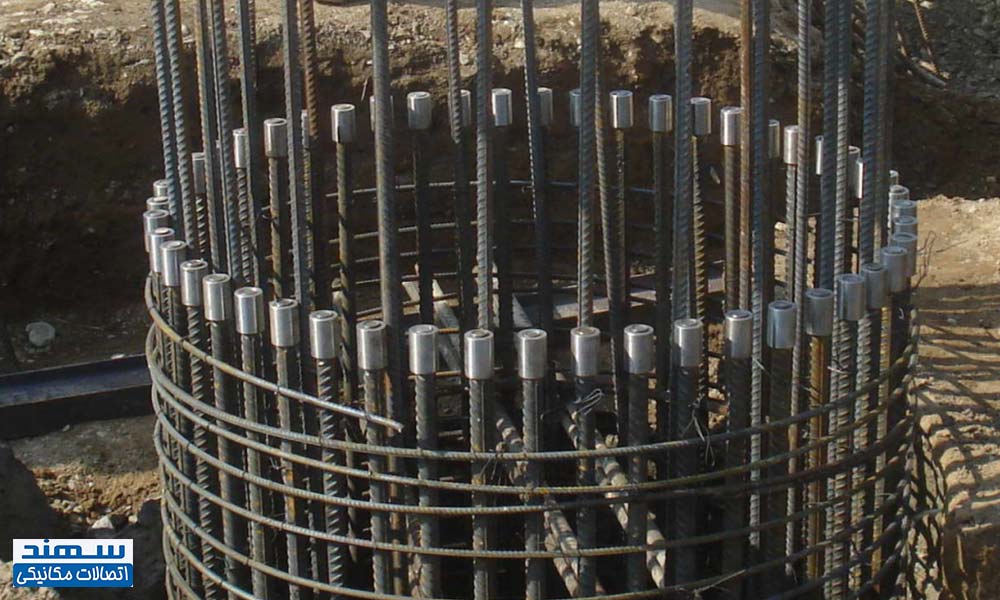


During the construction process of building projects, whenever two rebar pieces need to be connected to form a longer reinforcement bar, a mechanical rebar splice or rebar coupler can be used. In fact, a mechanical rebar splice is a component that connects two shorter rebars and transforms them into a single longer rebar. This means that instead of having two short rebars, there will be one longer rebar with all the properties and characteristics of a single continuous bar. Mechanical rebar splices are a highly suitable alternative to other rebar connection methods, such as lap splicing.
Why Mechanical Rebar Splices?
Now that we are familiar with mechanical rebar splices and understand their functionality, the question arises: why should we use mechanical rebar splices instead of lap splicing, which has been used in the construction industry for many years?
In response to this question, it should be said that although lap splicing is very common and widely used in many projects, it has many disadvantages that mechanical rebar splices have overcome. For example, when using lap splicing, the steel-to-concrete ratio increases, resulting in higher structural weight and increased costs. However, when mechanical rebar splices are used in a structure, the steel-to-concrete ratio remains balanced, reducing the structural weight and allowing cost savings.
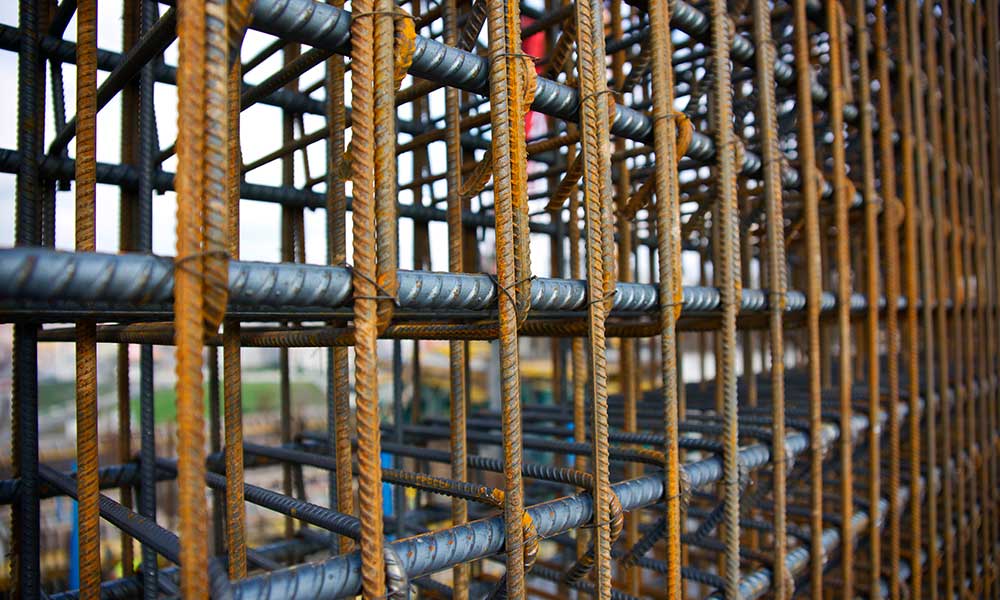
Additionally, when using lap splicing, the increased steel-to-concrete ratio causes reinforcement congestion in some areas of the structure. This creates difficulties during concrete placement, as concrete may not easily flow through the spaces between rebars. As a result, reduced structural strength may occur at the lap splice locations. However, this issue does not exist when using mechanical rebar splices because they reduce reinforcement congestion and provide sufficient space for concrete movement between rebars.
Another very important point is that the quality and strength of a lap splice depend on the concrete cover and its quality. If the concrete becomes weak for any reason, the lap splice connection may fail. This issue is also resolved by mechanical rebar splices because, when using mechanical connections, there is no dependency between the reinforcement and the surrounding concrete. Clearly, a stable and reliable mechanical connection performs much better than a lap splice.
In general, using couplers in structures makes the conditions and quality of concrete independent from the force transfer mechanism within the reinforcement network. This is one of the most important and significant advantages of using couplers and mechanical connections. It should also be noted that lap splices have unreliable performance in the inelastic range, a problem that mechanical rebar splices have successfully addressed.
Types of Mechanical Rebar Splices
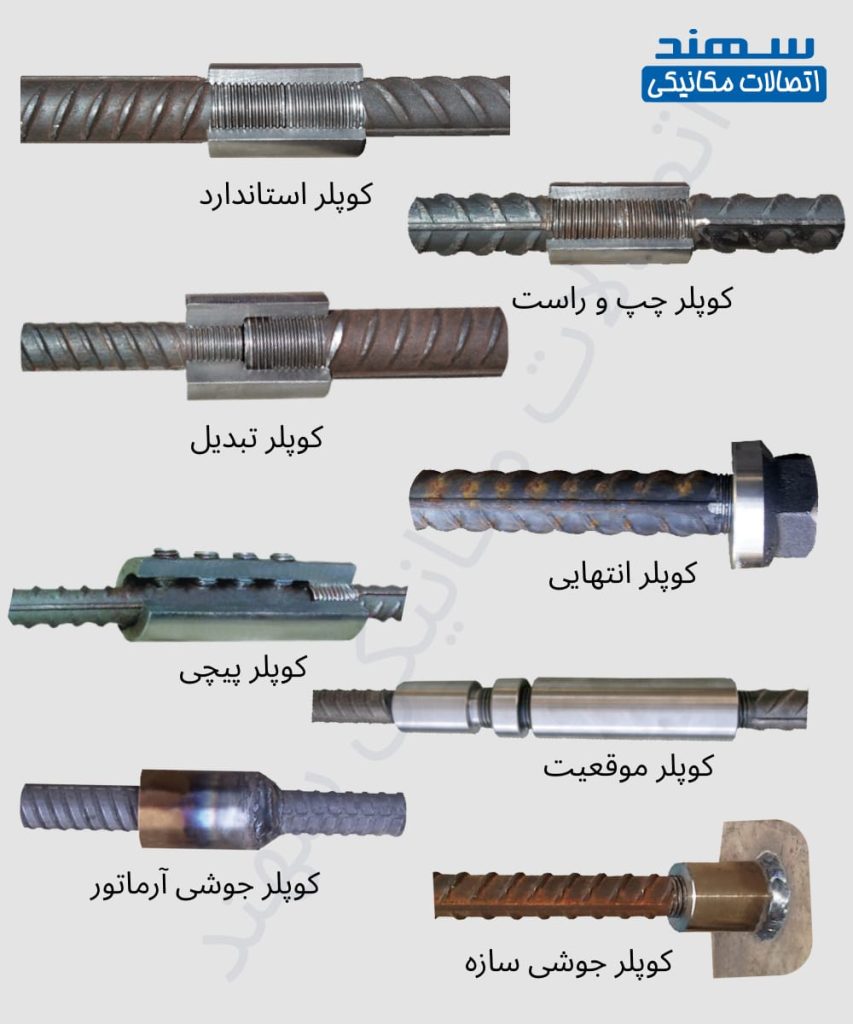
Mechanical rebar splices or rebar couplers come in different types depending on the structural conditions and requirements. Each type has a specific application in structures, and the appropriate coupler can be selected according to the conditions available in the project. Below, we will discuss the various types of mechanical rebar splices:
- Standard Coupler
- Left and Right-Hand Thread Coupler
- Reducing Coupler
- End Coupler
- Position Coupler
- Structural Weldable Coupler
- Rebar Weldable Coupler
- Bolted Coupler
- Upset Standard Coupler
Sahand Mechanical Splices is recognized as the first and largest manufacturer of rebar couplers in Iran and neighboring countries, continuously striving to provide high-quality domestically produced products to consumers. This company has participated in several major national projects through its products and cooperates with highly reputable companies inside and outside Iran. Additionally, companies and contractors can, if desired, submit their purchase lists for their projects and benefit from the high-quality products of Sahand.