

Advantages of End Couplers (Terminators) Instead of Hooks in Reinforced Concrete Structures
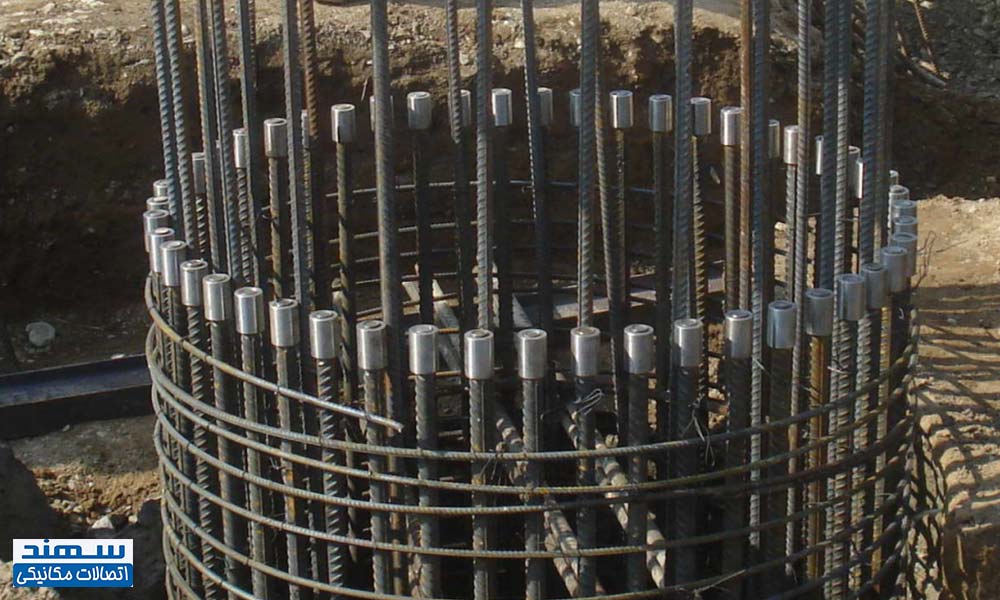
Before discussing the advantages of end couplers, it is useful to first learn more about end couplers. An end coupler is a type of coupler used in the construction industry as an alternative to bending the end of rebar. By using this coupler in structures, rebar congestion can be reduced, which is one of the advantages of end couplers. This coupler is used during various stages of building construction and has a wide range of applications. The ratio of the effective bearing area of this coupler to the cross-sectional area of the rebar used is considered to be 4 times.
In summary, the advantages of end couplers include easier rebar installation, reduced rebar congestion, elimination of bending operations, and reduction of the amount of rebar required in structures. In the following sections, the technical and formula-based aspects of this subject will be discussed so that interested readers can also become familiar with this concept from a theoretical perspective.
Experiences gained from major earthquakes around the world have shown that the most critical area in moment-resisting frame systems is the beam-column connection zone. Failure to comply with ductility requirements in the connection region, due to the presence of high shear forces combined with bending moments in this area (Figure 1), can lead to failures in these regions during an earthquake.
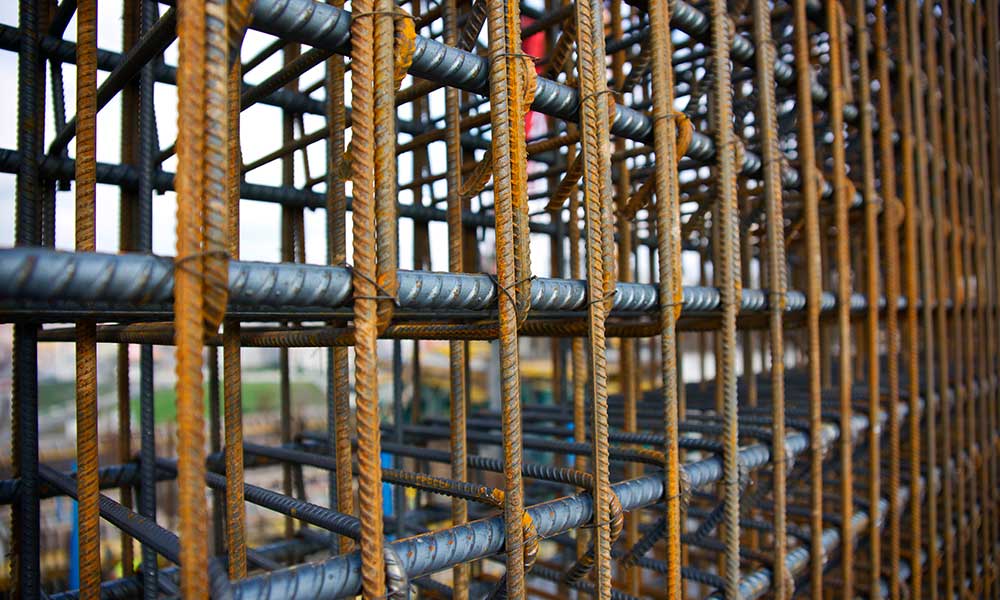
In reinforced concrete moment-resisting frames, the spacing of stirrups within the connection zone must be limited according to code requirements. In practice, due to the accumulation and interference of beam and column reinforcement, rebar installation becomes difficult, and concrete placement usually cannot be performed with the desired quality (Figure 2). Therefore, by using mechanical end anchors instead of hooks (90-degree bends), this issue can be significantly reduced.
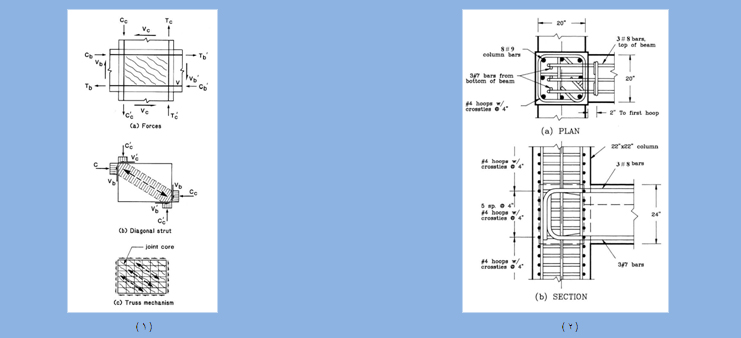
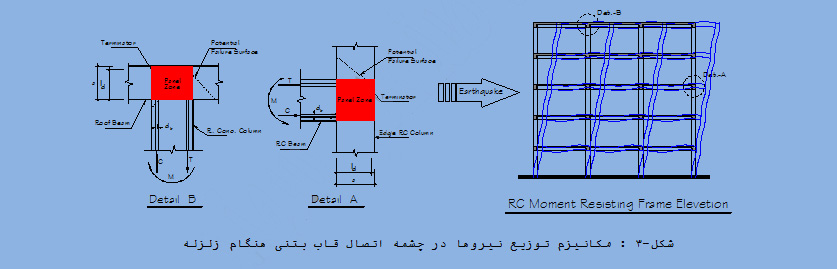
According to the principles governing reinforced concrete moment-resisting frame systems, when the direction of earthquake forces changes, the longitudinal reinforcement of the beam within the connection zone (Panel Zone) acts either in tension or compression. In the tensile condition, the performance of the mechanical end anchor (end nut) of the beam reinforcement at the end of the connection zone is such that, as shown in Figure 3, it causes the concrete within the connection zone to be pulled out in a cone-shaped failure mechanism. In this condition, the shear strength of the concrete combined with the column stirrups is sufficient to resist this action.
When the direction of earthquake forces reverses, the beam reinforcement within the connection zone naturally acts in compression. Obviously, in this condition, the end nut of the reinforcement has no effectiveness, and only the bond stress between the reinforcement and the surrounding concrete within the connection zone can provide the required anchorage for the compressed reinforcement in this area. According to the ACI Code, the development length of compression reinforcement is obtained from the following equation:

Where:
db: is the diameter of the longitudinal reinforcement (Reinforcing Bar Diameter)
Fy: is the specified yield strength of the reinforcing bar (Specified Yield Strength of Reinforcing Bar)
f’c: is the specified compressive strength of concrete (Specified Compressive Strength of Concrete)
If, in the most critical condition, Fy is assumed to be 4000 kg/cm² and f’c is assumed to be 210 kg/cm², then based on this, the minimum compression development length of the reinforcement is equal to:
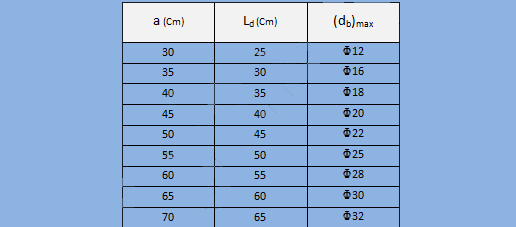
ld=0.075db*4000/(210^(1/2))=20db
This means that the minimum horizontal development length of the compression reinforcement must be at least equal to 20 times the diameter of the reinforcement bar, so that the bond stress between the reinforcement and concrete is sufficient to provide adequate anchorage of the reinforcement within the concrete.
Considering the above points, the table related to the minimum column dimension (or roof beam dimension) required for anchoring the reinforcement can be obtained. It should be noted that the use of mechanical anchorage is technically and economically suitable only for relatively thick beams and columns that provide the required reinforcement development length, and this is considered one of the advantages of end couplers.
Sahand Mechanical Splices is the largest and most reputable company in the field of coupler production in Iran. Various types of rebar couplers are manufactured and tested by the specialists of this company and are supplied to all parts of Iran. In addition, neighboring countries also utilize Sahand’s manufactured couplers in their construction projects. The company is proud to export its products to neighboring countries, in addition to supplying numerous national and major projects throughout Iran.
If you are interested in cooperating with Sahand Mechanical Splices for your construction projects, you can contact the company every day at +98 21 44024118, or visit the company’s head office located on Ayatollah Kashani Street for in-person consultation.